Original Z battle decision guide
Super Robot Wars Z spirit commands: how to use them
Choose a spirit command for the result you need next: a reliable hit, safer defense, better positioning, or a decisive attack. Then check the pilot's current SP and the order of actions before spending it.

Players searching for Super Robot Wars Z spirit commands often find a list first, then face the harder question on the map: when should a command be used? A hit, a safer enemy phase, reaching an objective, and finishing a boss are different problems. This guide focuses on the original PS2 Super Robot Wars Z. Check the pilot's command list, current SP, target, and next action before choosing. Z2's Hakai-hen and Saisei-hen and Z3's Jigoku-hen and Tengoku-hen are separate games; do not transfer their users, costs, or effects without checking the original game's own display.
Identify the game first
Confirm which Super Robot Wars Z spirit commands you are using
Start by matching the full title and platform on the reference page. The original Super Robot Wars Z is the PS2 game; Hakai-hen, Saisei-hen, Jigoku-hen, and Tengoku-hen belong to later releases. The series reuses words and command names, but that does not prove that a pilot learns the same command, pays the same SP cost, or receives the same effect in every game. If a search result only says Z, look for its platform and title before treating a table as evidence.
- Distinguish the original Z from Z2 and Z3 before using a command table.
- Check the deployed pilot's command list and current SP on this map.
- Name the problem to change: a miss, a dangerous counterattack, or a missed objective.
- Read the in-game target and duration, then match them to the action order.
Connect an effect to an action
Choose a spirit command for the battle problem in front of you
Before ranking commands by strength, ask what a failed action would cost. If an attack misses, does an important enemy remain? If a counterattack lands, could a unit be lost? If a unit moves one square short, will it miss a turn-limited objective? Finding the point where the result changes makes it easier to decide whether accuracy, defense, movement, or attack deserves the SP.
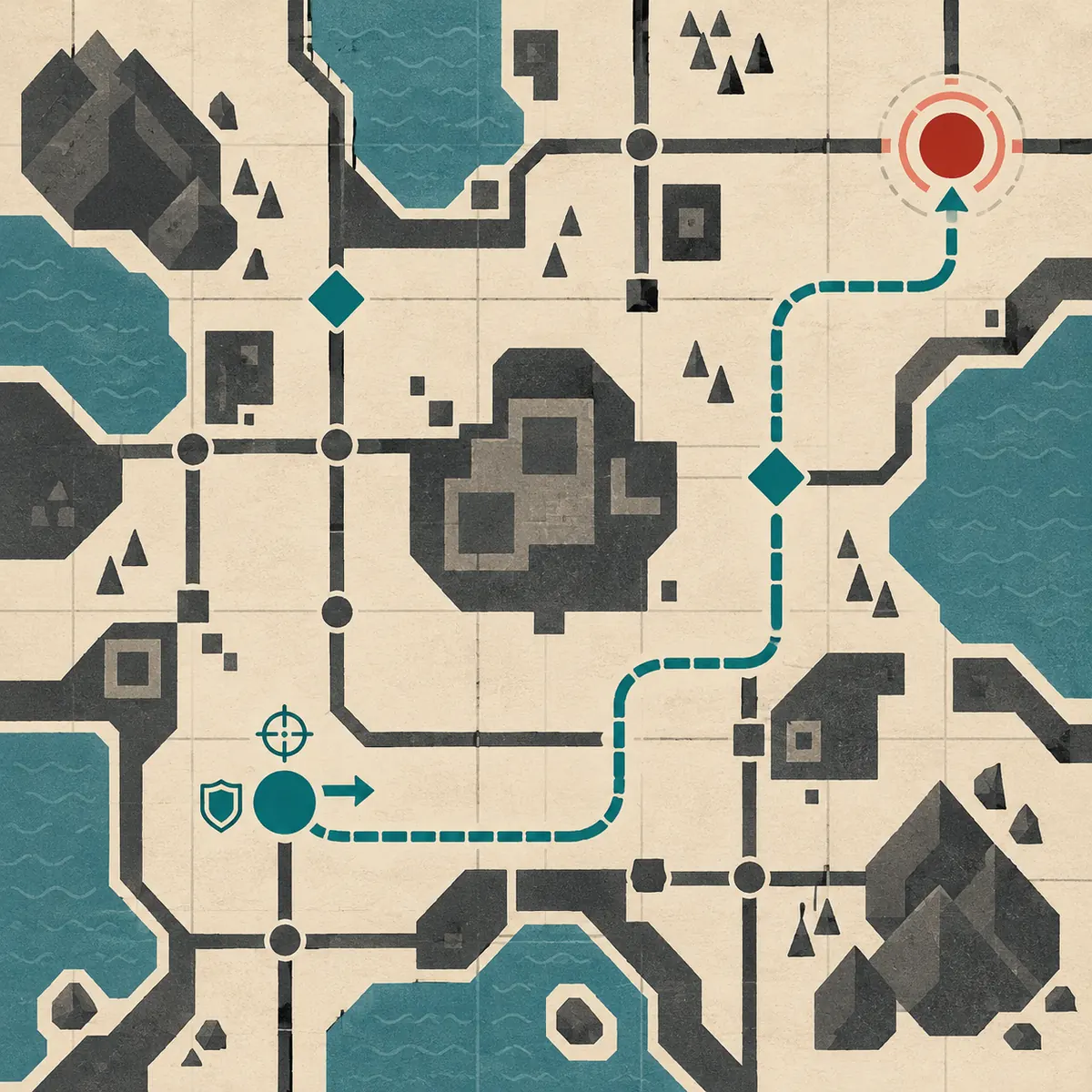
| Problem | Possible choice | Check before use |
|---|---|---|
| The attack may miss | Review an accuracy option such as 必中 | Target, weapon range, and displayed hit chance |
| A counterattack is dangerous | Review a defensive option such as 不屈 or ひらめき | Who is exposed, and how many attacks the effect covers |
| The unit cannot reach the goal | Consider a movement option such as 迅速 | Whether the move enables an attack or objective |
| The boss needs a decisive hit | Compare attack options such as 熱血 or 勇気 | Accuracy, EN or ammunition, support, and action order |
| An ally needs support | Check recovery or supply options such as 信頼 or 補給 | Whether that pilot and unit need help now |
Reserve SP for later fights
Plan SP backward from the boss and optional objectives
Using every convenient command early can leave too little flexibility for a boss or a reinforcement wave. You do not have to save every point, but decide which later actions are important before spending freely. Identify the units expected to attack the boss and the allies who may need accuracy or defense support. Set aside what those actions plausibly require, then use the remaining SP for movement or a dangerous counterattack that could change the map now.
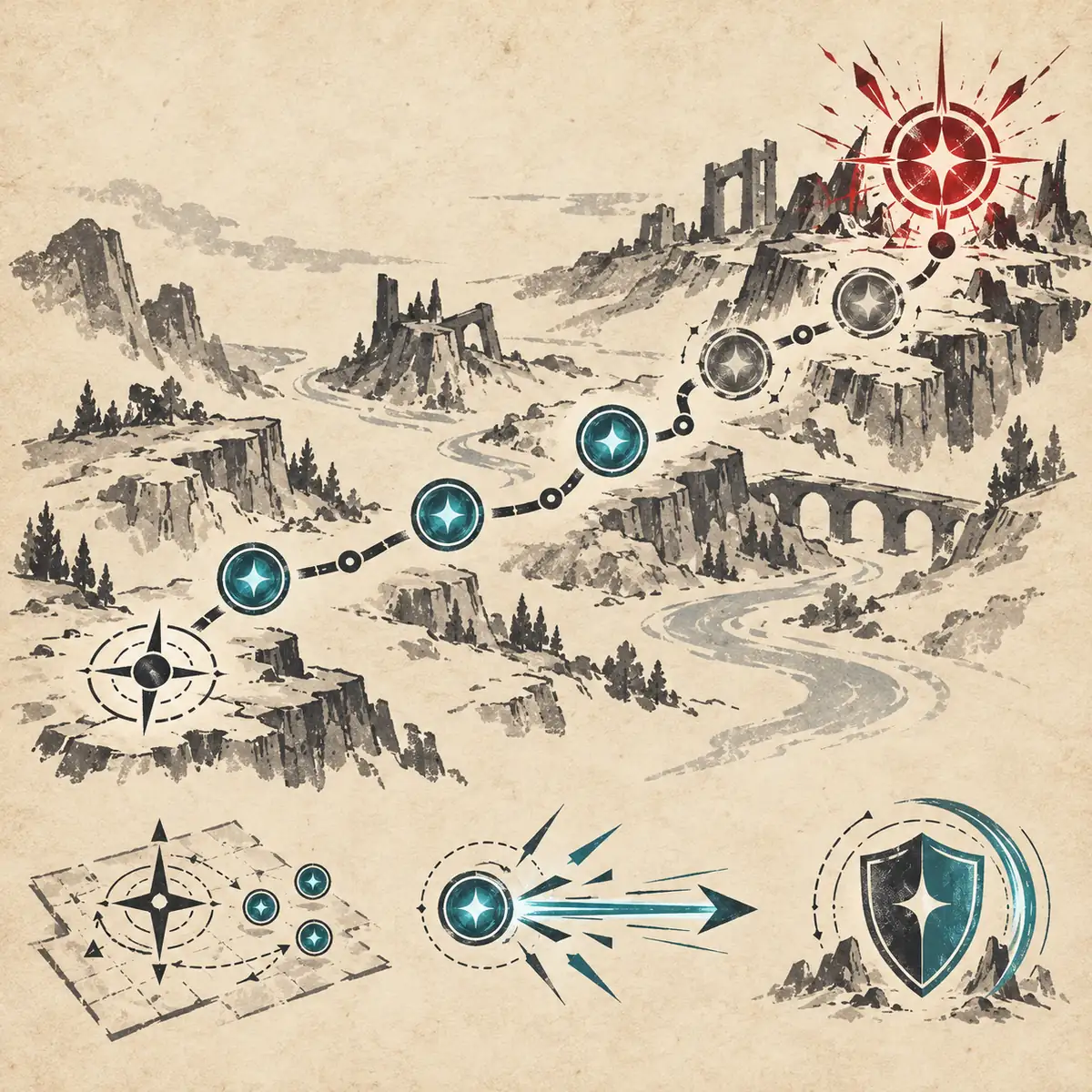
- 1. Read the map objectiveNote the victory condition, any turn limit, protected ally, reinforcement, or optional goal.
- 2. Pick the decisive actionChoose who will attack which enemy and who must support that move.
- 3. Assign only needed effectsUse accuracy, defense, movement, or attack support where it changes the result.
- 4. Set an early-use allowanceKeep enough SP for the planned action; spend early where failure would cost more.
- 5. Revise after combatUse hit, damage, and reinforcement results to update the next turn's plan.
| Battle point | Check on this turn | Decision for the next turn |
|---|---|---|
| After deployment | Read the objective and turn limit | Choose the next acting units and SP reserve |
| First movement | Measure the distance to the goal | Check whether the next turn enables an attack |
| Moving the front line | Check enemy range and counters | Use movement support only if the position helps |
| Preparing accuracy | Select the real target and weapon | Decide whether support should join next turn |
| Before the enemy phase | Identify a unit at risk of a hit | Use defense now if waiting creates a real risk |
| Before the boss appears | Assign the attacker and support unit | Reserve SP for the planned attack order |
| Approaching the boss | Check range, EN, ammunition, and support | Set up a sequence that can finish the attack |
| Reinforcement response | Review known arrival timing and position | Keep SP for the units that can respond |
| Optional objective | Recheck remaining turns | Prioritize movement needed to reach the goal |
| An ally is in danger | Check HP and the enemy's next action | Compare recovery and defense before spending |
| SP is running low | Limit use to a target and named purpose | Separate planned use from emergency reserve |
| Near the clear condition | Check remaining enemies and unfinished goals | Confirm the objective before ending the map |
Use original Z command names carefully
A Rand and Mail example before and during a boss fight
Original Z reference material lists commands for Rand such as 必中, 不屈, 気合, 迅速, and 勇気, and for Mail such as 偵察, 信頼, 熱血, 補給, and 覚醒. Treat those names as prompts for checking your roster, not as a source of fixed numbers for another game. Begin with the boss's position, the attacker's range, the displayed hit chance, and the risk of a counterattack. Then identify which one of those conditions is preventing the planned action.
If accuracy is the obstacle, check whether an option such as 必中 fits the attack and target shown in the menu. If the unit is too far away, first consider the move that makes it reach a useful square; an attack effect used before the unit can act may be wasted. After the attacker is in range and its weapon resources are ready, consider an attack-oriented option such as 熱血 or 勇気. If an ally is exposed to a dangerous counter, assign a defensive option such as 不屈 to that specific unit instead of using it on the whole team by habit.
- Before the attacker is in range, solve positioning and access first.
- Before a decisive hit, check accuracy, EN or ammunition, support, and order.
- Protect only the ally whose next incoming attack is a real threat.
- After combat, record what changed and avoid stacking effects with no added result.
Compare lists with the game menu
Verify users and SP costs in original Z references
Pilot-by-pilot tables are useful for finding who learns a command, when it appears, and what SP cost a source reports. First check that the page explicitly covers the original Super Robot Wars Z and the matching platform. A page about Hakai-hen, a series-wide overview, or a list without a title boundary may use similar terminology while describing different pilots or effects.
| Check | What to compare | When to pause |
|---|---|---|
| Game | Original Z and platform | The reference omits its game or platform |
| Pilot | Learned commands and unlock point | The formation or pilot assumption is unclear |
| SP cost | Displayed cost at selection | Only a later game's number is available |
| Target and duration | Ally or enemy, count, and duration | The source differs from the current menu |
One check before confirmation
A final check before using a spirit command
A common mistake is to focus on a command name and forget its target or the action order. Before spending SP, read the pilot, target, next action, and remaining SP in that order. For accuracy, match the planned weapon to the enemy currently selected. For defense, identify when the risky hit arrives. For movement or an extra action, check terrain, range, and whether the unit can still take the action you planned.
- Pilot and command: available on the current unit?
- Target and effect: correct ally or enemy, with the needed duration?
- Action order: will movement, support, and the attack happen in time?
- SP reserve: is the cost justified by a changed result?
Summary
Choose the result first, then spend SP in original Z
For Super Robot Wars Z spirit commands, name the obstacle that stops the next action: accuracy, survival, movement, attack, or support. Plan around the boss and optional objectives, then spend at the turn where the effect can change the result.
Check pilot access and SP in the original Z menu. Use later-game lists only after verifying the title boundary, and revise your plan from the battle result.
Questions players ask
Super Robot Wars Z spirit commands FAQ
Are the original Z spirit commands the same as Z2 or Z3?
Do not assume they match. Hakai-hen, Saisei-hen, Jigoku-hen, and Tengoku-hen are separate games. Check their pilot lists, SP costs, and in-game descriptions independently.
Can I use a spirit command early in a map?
Yes, when it changes a risky hit, survival, or a turn-limited objective. Reserve SP for a boss or later goal before spending on a routine enemy.
Does every pilot pay the same SP cost for a command?
Do not assume a universal cost. Compare an original Z pilot reference with the current command menu and roster.
Should I use an attack command before a boss is in range?
Check the attacker's range, weapon resources, accuracy, and support first. Align an attack effect with the action that will use it.
Are several commands always better than one?
Only combine them when each changes a different part of the result. Save SP when an extra effect adds nothing.
Where can I check an exact SP cost?
Use an original Z pilot list as a reference, then confirm the displayed cost in the game's command selection panel.
References
Sources for game identity and command lists
- Official Super Robot Wars series lineup Official reference for the original title and platform.
- Super Robot Wars Z: Spirit Commands - Original pilots Fan reference for original Z pilot command names, including Rand and Mail.
- Spirit command index - Super Robot Wars Z guide A command-based reference reporting users, learning points, and SP costs for original Z.
This is an unofficial fan guide, not an official walkthrough. If a fan reference differs from the active game menu, verify the title and use the displayed command information for the current battle. The diagrams are editorial illustrations, not game screens or official assets.